

You can learn how to make a deepfake video in two ways. Online face swap tools like VidMage work right in your browser, with no download and no sign-up. Local software tools like DeepFaceLab give you more control but take more time and have a complex setup.
This guide covers both methods to create the best deepfake videos.
Let's start.
How to Make a Deepfake Video Online with VidMage?
VidMage's video face swap tool runs entirely in your browser. Here's how to use it:
Step 1: Go to the VidMage video face swap page and click "Upload Video." Choose a clip from your device or choose from the given template library. VidMage accepts MP4, MOV, and other common video formats.
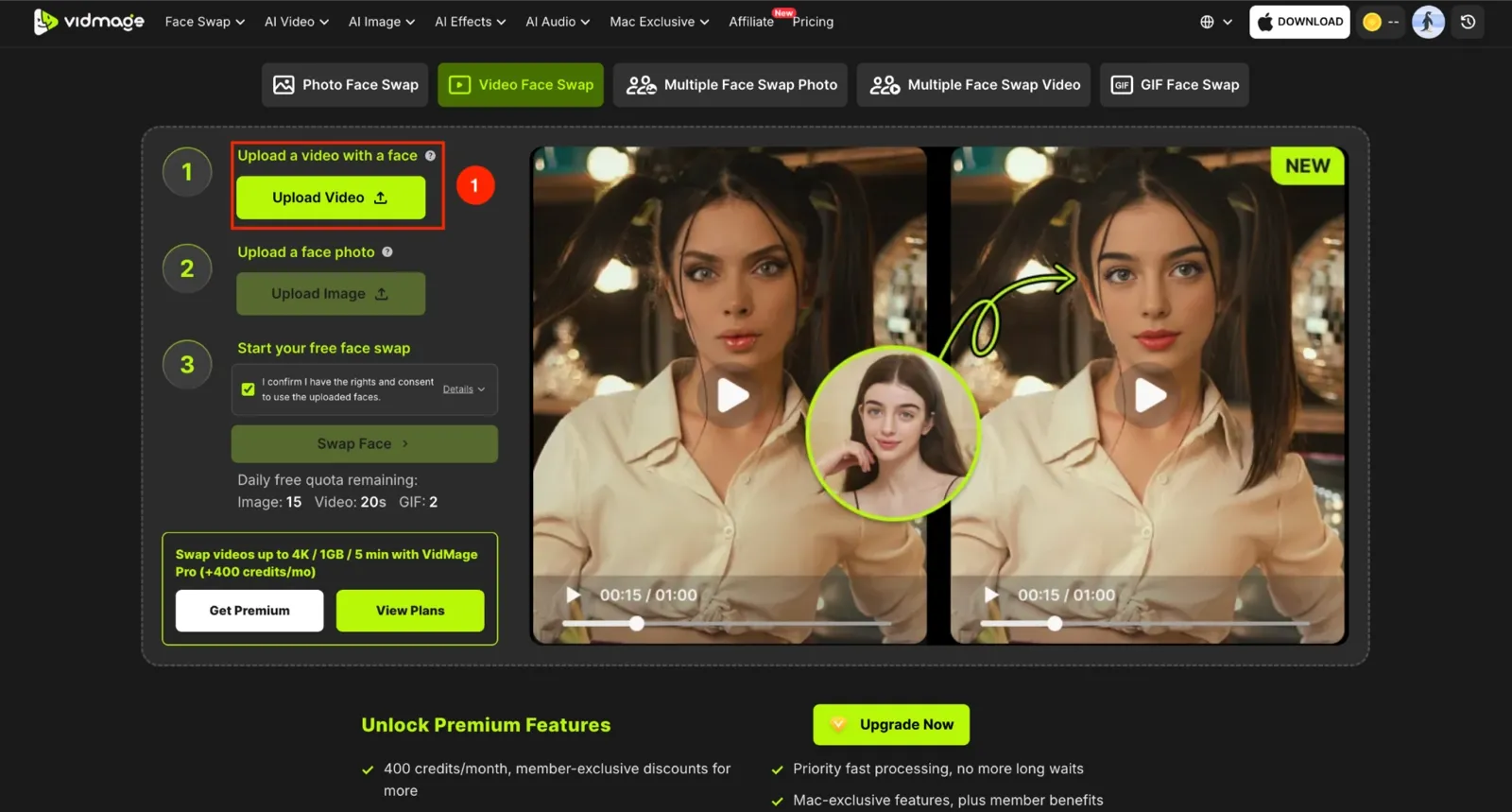
Step 2: Click "Upload Image" and add a clear and front-facing photo of the face you want to use. VidMage automatically detects the face, so you do not need to mark it by hand.
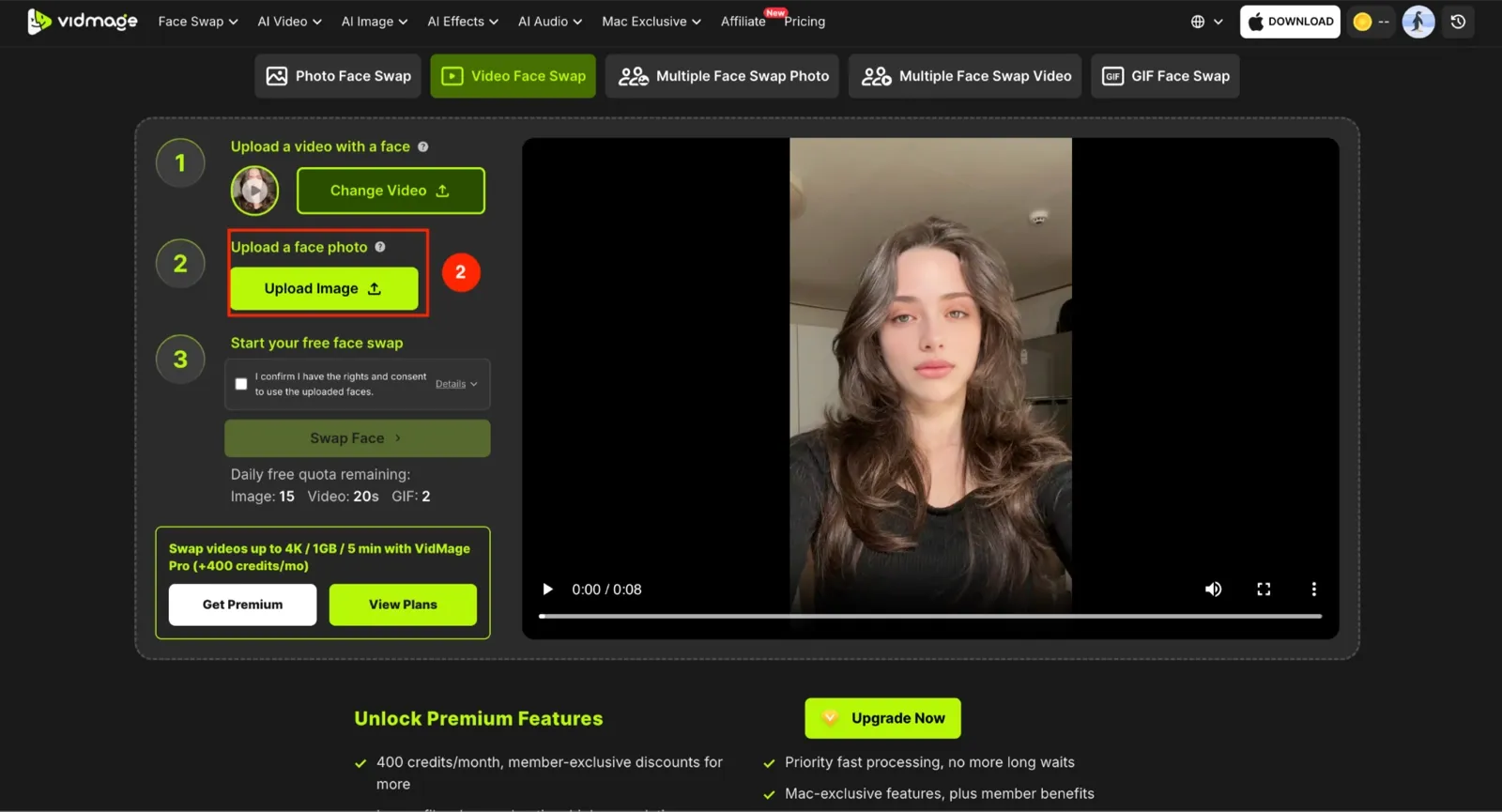
Step 3: Click "Swap Face." VidMage maps the new face swap onto every frame of the clip, matching expressions, head movements, and lighting as it goes.
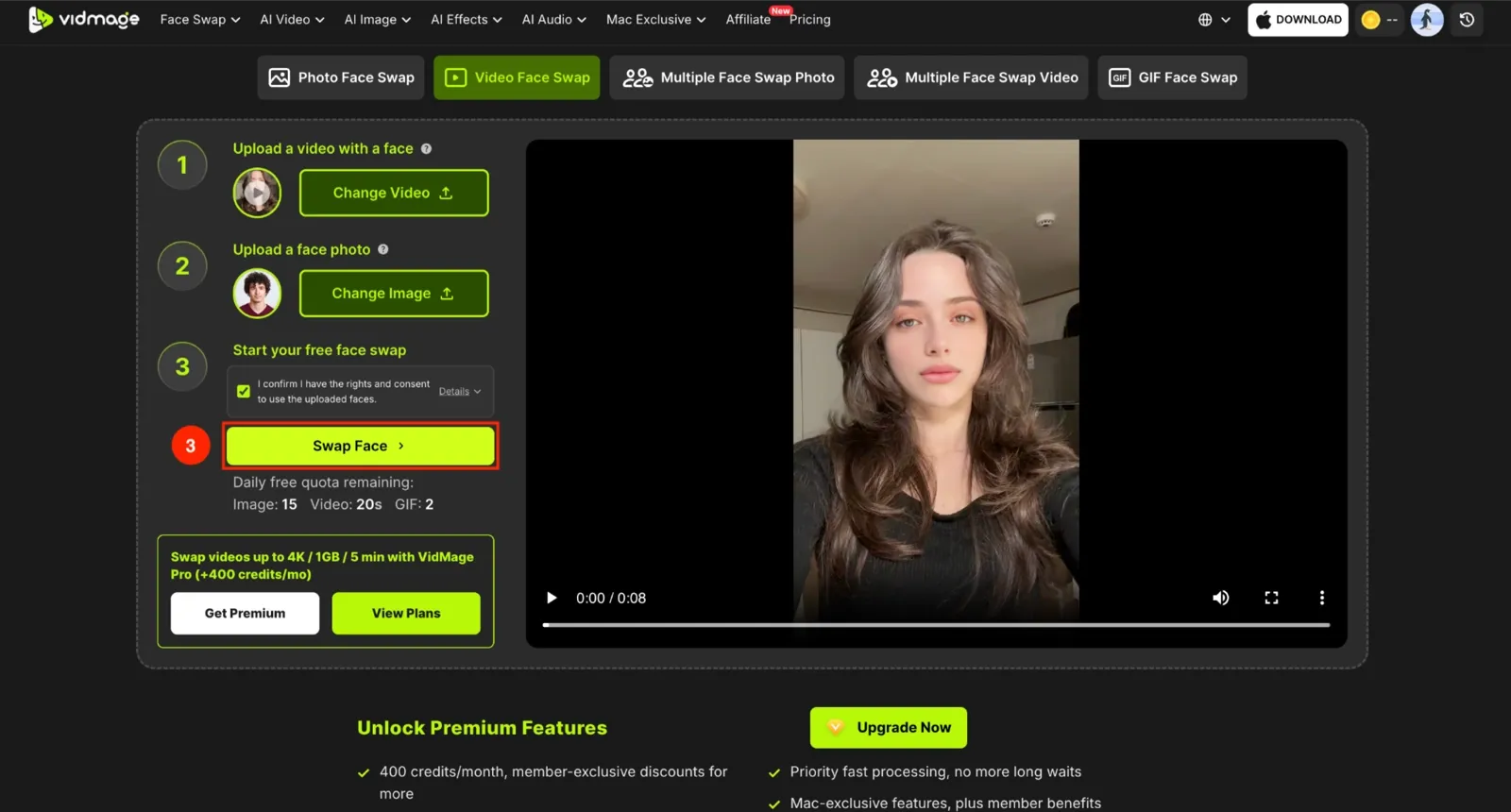
Step 4: Once the video face swap is ready, click "Download" to save the video to your device.
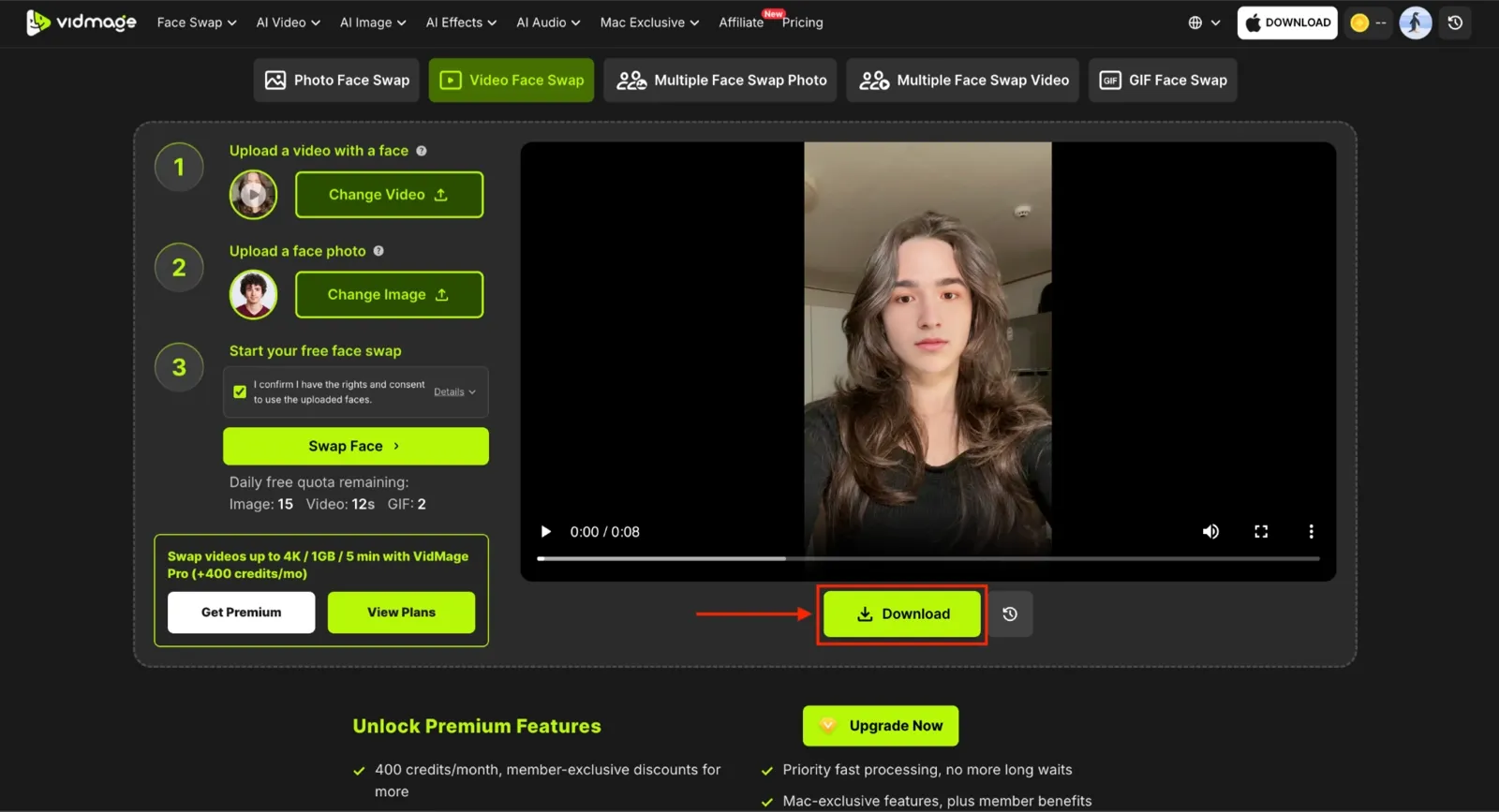
Note: You do not need to create an account or buy a subscription to use VidMage. The free version gives you 20 seconds of video face-swapping per day. You get a watermark-free download. If your clip has more than one face, VidMage can swap multiple faces in a video.
How to Make a Deepfake Video on Your Phone?
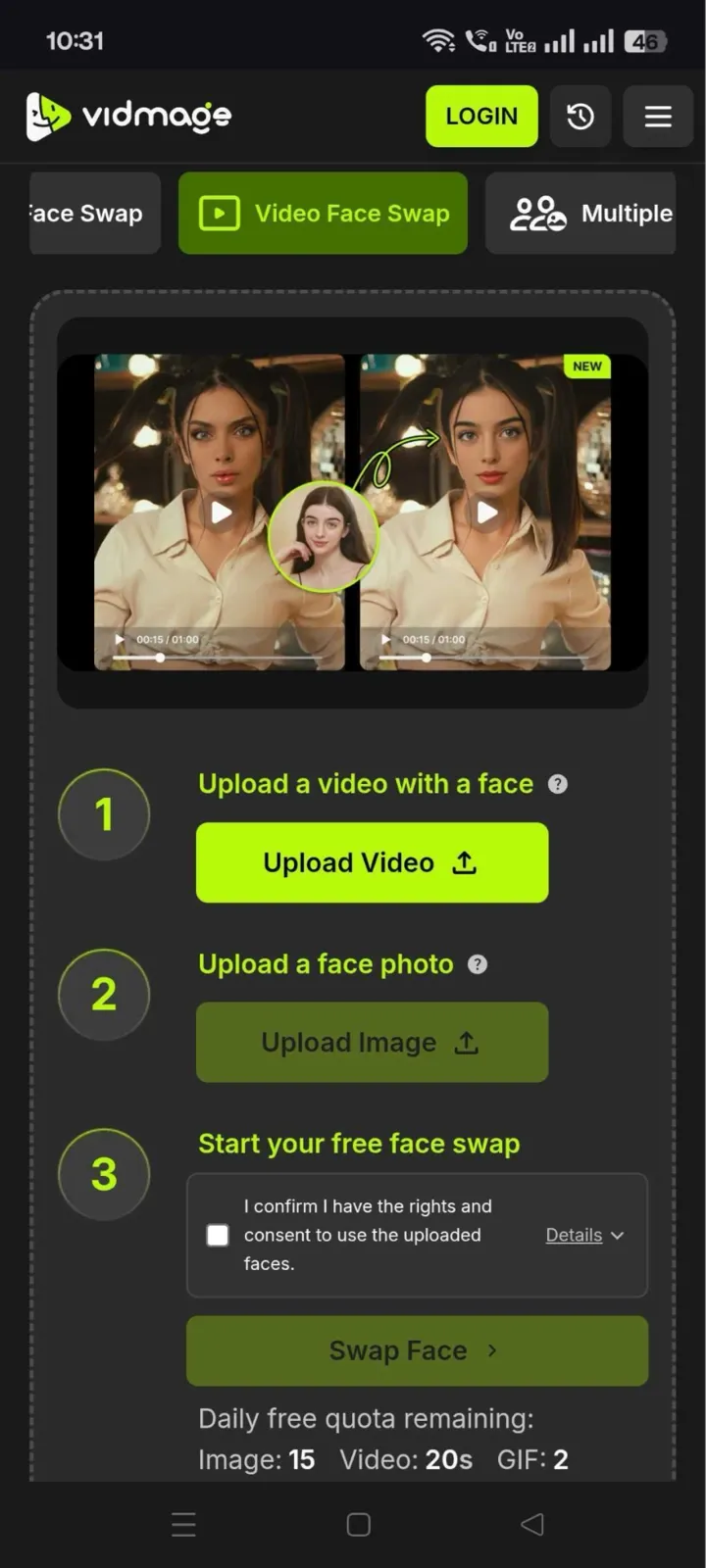
You don't need a separate app to create deepfake videos on your phone. Open VidMage in your phone's browser (Safari or Chrome both work), then follow the same three steps: upload your video, add the target face, and tap "Swap Face." The site works well on mobile, so nothing about the process changes beyond the screen size.
How to Make a Deepfake Video Offline Using DeepFaceLab?
DeepFaceLab is open-source software built for advanced users. It gives you more control than an online tool, but it asks for more setup, more time, and a stronger machine.
Step 1: Download DeepFaceLab from its official GitHub page and install it on a Windows PC with a strong GPU.
Step 2: Extract frames from your source video so the software has individual images to work with.
Step 3: Extract the face sets (cropped faces) from both your source video and your target face photos.
Step 4: Train the model. A GAN studies the face sets and learns how the target face appears from different angles and under different lighting conditions. This step can take hours or even days, depending on your GPU.
Step 5: Merge the faces. Once training finishes, merge the trained face back onto the original frames and clean up the mask if the edges look rough.
Step 6: Export the final video. Stitch the merged frames back together into a finished MP4.
Note: DeepFaceLab is not a one-click install. It involves command lines, a Python setup, and GPU drivers, so plan for setup time before you even reach Step 1. It's free, but it's built for people who are comfortable troubleshooting software, not casual users.
Online Face Swap vs. DeepFaceLab: Which Should You Choose?
Both online face-swap tools and local deepfake software can produce realistic results, but they are designed for different users. If you want to upload a video, swap faces, and generate a result in minutes, an online tool like VidMage is the easier option. It handles the AI processing for you and works directly in your browser.
DeepFaceLab, on the other hand, gives you more control over training, masks, and merging. The trade-off is that it requires a powerful GPU, software downloads, and hours or even days of processing. The table below can help you decide which approach fits your needs.
| Feature | Online Tools (VidMage) | DeepFaceLab |
|---|---|---|
| Setup Time | A few minutes | Several hours |
| Download Required | No | Yes |
| Sign-Up Required | No | Yes |
| GPU Needed | No | Yes, recommended |
| Ease of Use | Beginner-friendly | Advanced |
| Processing | Cloud-based | Local processing |
| Realistic Video Face Swap | Yes | Yes |
| Multi-Face Swap | Up to 4 faces | Possible but manual |
| Live Face Swap | Supported | Not supported |
| Training Required | No | Yes |
| Manual Frame Editing | No | Yes |
| Quality Control | High with minimal effort | Highest with manual tuning |
| Best For | Quick, realistic face swaps and creators who want results fast | Researchers, VFX artists, and advanced users |
| Ideal Use Cases | Realistic video face swaps, multi-face swaps, social content, mobile users | Film projects, custom models, maximum control |
| Learning Curve | Low | Very high |
Tips for a Realistic DeepFake Video
The quality of your deepfake depends more on your input photos and videos than on the tool itself. Here are some tips that will help you get a realistic deepfake video:
Use a clear, front-facing photo with good lighting and no sunglasses, hair, or objects covering the face. This helps the AI accurately detect facial landmarks.
Choose a face photo with lighting similar to your source video. If one is brightly lit and the other is dark, the final swap can look unnatural.
Pick a photo with an expression that matches the video. A smiling face placed onto a serious video often creates awkward results.
Start with a short video clip before processing a long one. Testing within a few seconds lets you check the quality and make adjustments without wasting time.
Use videos with one clear face whenever possible. Multiple faces, fast movements, or motion blur can reduce the realism of the face swap.
Upload higher-resolution photos and videos. Better source files usually yield sharper, more realistic results.
FAQ
How long does it take to make a deepfake video?
Online tools like VidMage usually take between 1 and 2 minutes, depending on the video length. Local software such as DeepFaceLab takes much longer, often hours, since the model has to train before it can generate anything.
Do I need a powerful computer?
No, you don’t need a powerful computer for online tools. You just need a browser and an internet connection. Local software is different. You'll need a powerful GPU to train a model in a reasonable time.
Is it legal to make a deepfake video?
Making a deepfake isn't illegal by itself, but how you use it can be. Many places restrict deepfakes that impersonate someone without consent, mislead viewers, or cause harm. Using the technology ethically means using your own face, or getting clear permission from the person whose face you're using. Don't pass the result off as real footage of someone who didn't agree to it.
Why does my deepfake look fake or blurry?
This usually comes down to the inputs. A low-resolution photo, poor lighting, or a partly hidden face all make the swap less convincing. Use a clear, well-lit, front-facing photo, and keep the lighting similar between your photo and your video.
Can I make a deepfake video without downloading anything?
Yes. Online tools like VidMage run in your browser, so there's nothing to install. You can try the free version without even signing up.
What's the difference between a face swap and a deepfake?
Face swap usually means replacing just the face in a photo or video. Deepfake is the broader term. It can include face swaps, cloned voices, or full-body movement.